
Last updated November 22, 2026
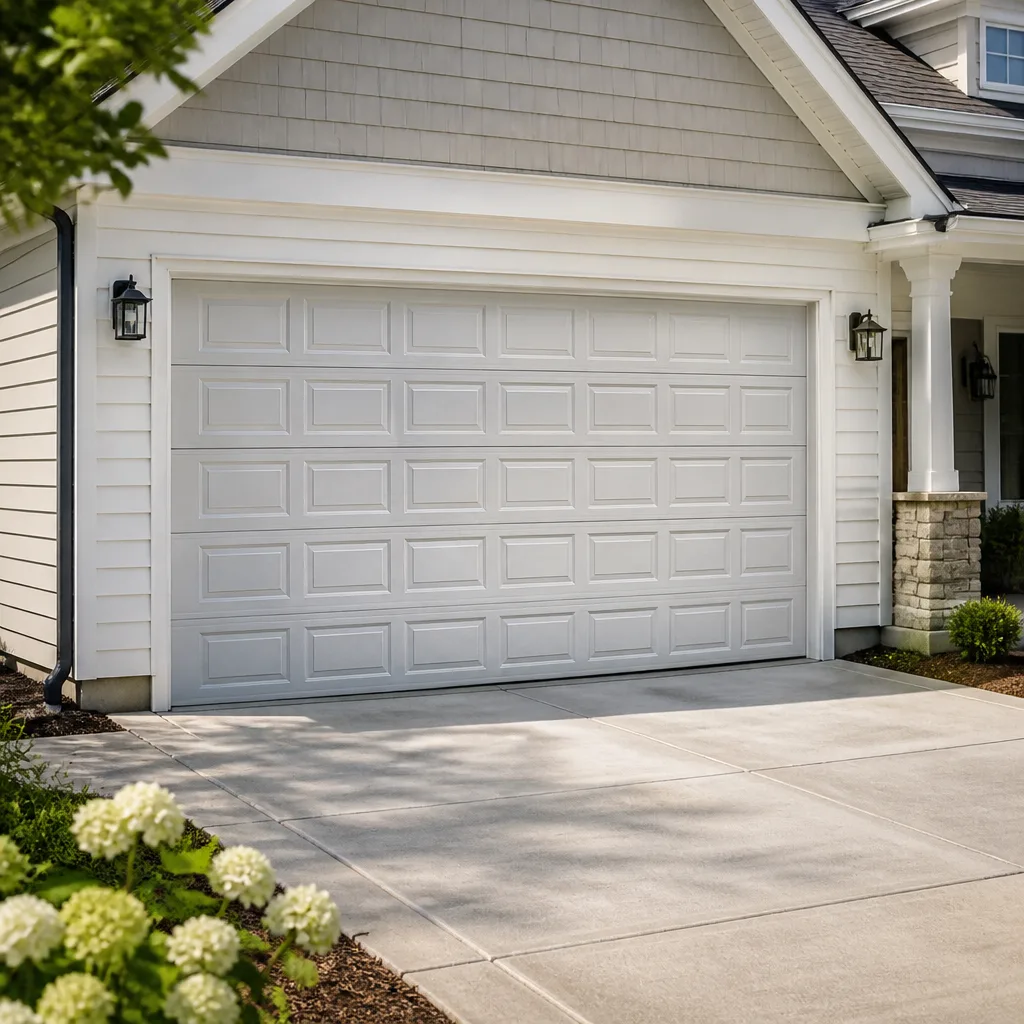 Raised-panel steel
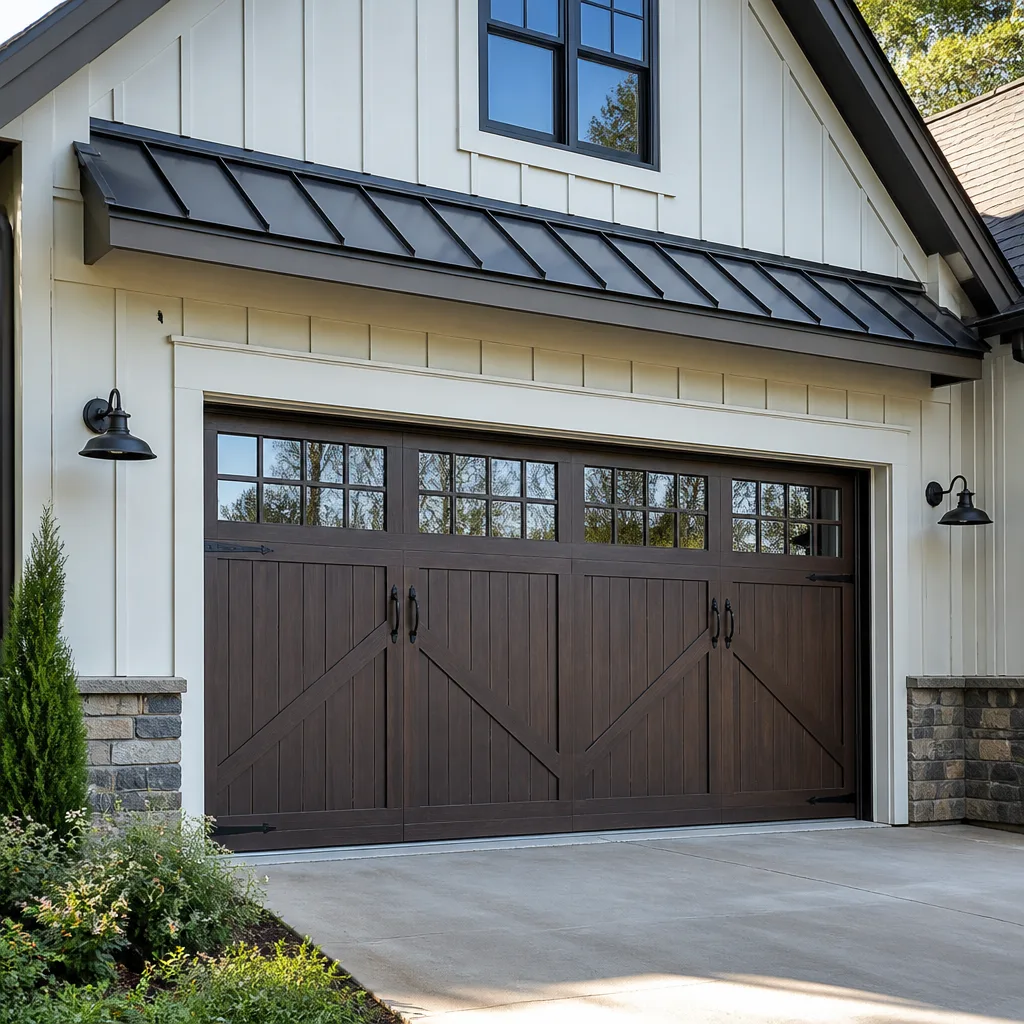 Carriage house
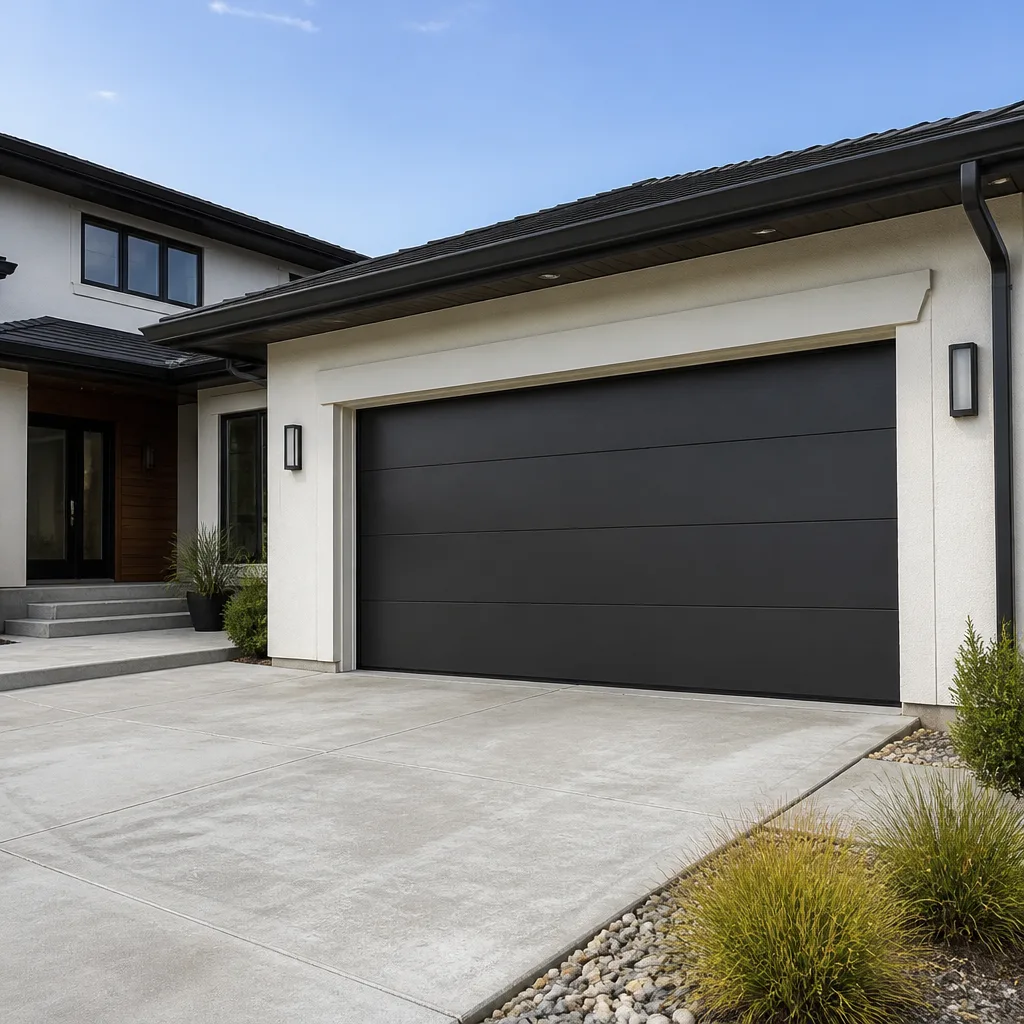 Modern flush
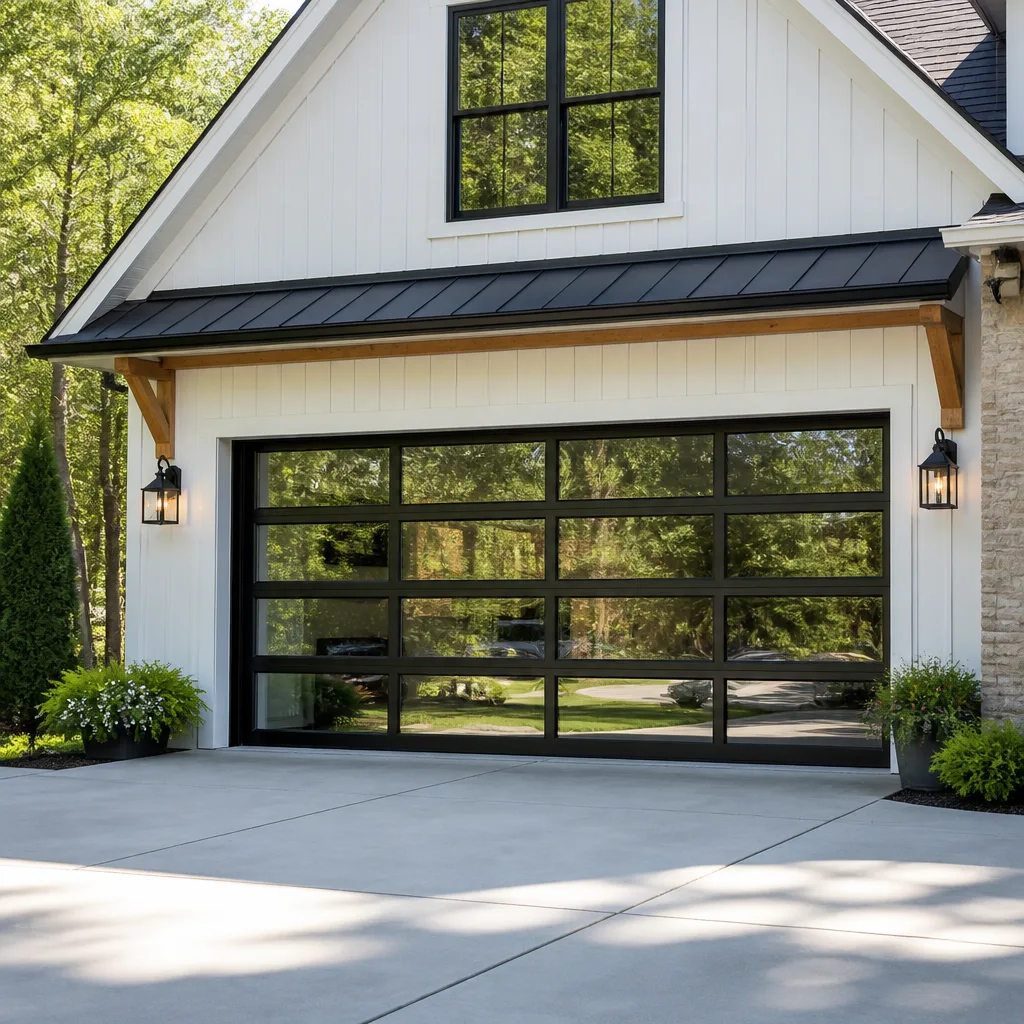 Full-view glass
 LiftMaster openers
 Chamberlain openers
Full 25-point door and opener safety check with every visit - springs, cables, rollers, tracks, and your LiftMaster or Chamberlain opener included
You get a price before we start. It does not change when the pro arrives.
Get your free estimateSeasonal Garage Door Care for Eagan: Year-Round Homeowner’s Guide
Most homeowners treat spring as a gentle restart. It isn’t. Spring in Eagan is the season when every stress your garage door absorbed over winter shows up at once – warped bottom sections, hardware that corroded quietly under road salt, and springs that were one cold snap away from letting go. The Twin Cities climate doesn’t wear your door evenly through the year; it loads different parts of the system in different months, and the damage usually announces itself weeks after the weather that caused it. This guide maps specific tasks to the actual threats each Eagan season brings, walks through a practical maintenance calendar you can follow, and shows you what to check and when to stop checking and call someone.
Quick Answer
The most important seasonal garage door task in Eagan is a thorough fall prep done before the first hard freeze – lubricating moving parts, testing the seal, and checking auto-reverse function – because winter cold is what breaks springs and strains openers. Spring is the season for a damage audit after ice and salt exposure, summer calls for attention to heat and UV on south- and west-facing doors, and winter is mostly about watching for sluggish operation and calling for garage door repair the moment something sounds wrong. Two light tune-ups a year, timed to the seasons, prevent most of the expensive failures we see.
Styles & brands we work with
- Raised-panel steel
- Carriage house
- Modern flush
- Full-view glass
- LiftMaster openers
- Chamberlain openers
Table of Contents
- Why Eagan’s Climate Treats Your Garage Door Differently
- Fall Prep: The 30-Day Window Before First Freeze
- Winter: Opener Force Settings and Why Auto-Reverse Drifts in Cold
- Spring Damage Audit: What Ice and Salt Season Leaves Behind
- Summer: UV and Heat on South- and West-Facing Doors
- Your Season-by-Season Task Calendar
- Springs: The Component That Fails Most in Cold Weather
- Common Mistakes to Avoid
- When to Call a Professional
Why Eagan’s Climate Treats Your Garage Door Differently
A garage door in Eagan lives through a wider temperature swing in a single year than doors in most of the country see in five. Summer afternoons push into the nineties, winter nights drop well below zero, and the freeze-thaw cycle in between works on your door’s seals, tracks and hardware the way water works on a sidewalk crack. That range is why seasonal care here isn’t optional maintenance – it’s the difference between a door that ages slowly and one that needs a new opener or a full set of springs years before it should.
The load doesn’t land evenly. Two forces do most of the damage:
- Cold contraction. Metal tracks, springs and hinges contract in extreme cold. Contraction throws alignment off, tightens tolerances, and puts stress on the parts holding the door’s weight.
- Moisture and road salt. Winter driving throws a fine spray of salt and grit onto the bottom section and lower hardware of every Eagan garage door facing the driveway. Left alone through spring, it pits hinges, rollers and bottom brackets.
Newer Eagan subdivisions – the ones that went up fast through the 1990s and 2000s – tend to have insulated steel doors on a single attached garage, often a Clopay or Wayne Dalton model, working hard every day of the year. Those doors handle the cold well but show seal and hardware wear sooner if nobody’s watching. Older homes around the older core of town may have wood or wood-composite sections that respond to our climate differently again: swelling at the bottom, paint failing on the sun-facing side, and hinges that loosen as the seasons cycle.
The point isn’t to scare you into a maintenance contract. It’s that the seasonal threats here are specific and predictable – which means you can meet them with specific, timed tasks instead of reacting after something breaks.
Fall Prep: The 30-Day Window Before First Freeze
Fall is the single most important season for garage door care in Eagan, and there’s a specific reason: once the ground freezes and temperatures drop hard, the failures that were preventable in October become expensive in January. The roughly 30 days between the first sustained cool spell and the first hard freeze is your window. Miss it and you’re going into winter with a door that’s already under stress.
Here’s what to do during that window, in order:
- Lubricate every moving part. Rollers, hinges, the torsion bar bearing plates and the opener’s chain or screw should get a proper garage door lubricant – not WD-40, which cleans rather than protects. Cold makes dry metal bind; a thin film of the right lubricant keeps parts moving when temperatures drop.
- Test the bottom seal. Run your hand along the bottom rubber seal and look for cracks, hardening or gaps at the corners. A worn seal lets cold air and moisture in, and moisture is what freezes into ice that warps the bottom section. Replacing a seal is one of the cheapest preventive jobs there is.
- Check the weatherstripping on the sides and top. Same idea: gaps let snow and meltwater in behind the door, where they freeze against the frame.
- Test the auto-reverse. Place a solid object like a 2×4 flat on the floor in the door’s path and close the door. It should reverse on contact. Test the photo-eye safety sensors by passing an object through the beam while the door is closing. If either fails, get it fixed before winter – do not wait.
- Look at the springs. A spring with a visible gap or a stretched, sagging section is near the end of its life. Cold weather is when springs break, and a spring that fails at twenty below is a door that’s stuck and a car that’s trapped.
- Tighten the hardware. Roller brackets, hinge screws and track bolts loosen over the year. A quick pass with a socket wrench heads off a lot of winter rattles.
- Clear the tracks. Sweep out grit and debris. Anything in the track will get dragged into the rollers as the door moves.
If any of these steps turns up a problem you can’t fix yourself, that’s the moment to call. A free estimate in October costs you nothing; a broken spring in January costs you a tow and a lot of inconvenience.
Winter: Opener Force Settings and Why Auto-Reverse Drifts in Cold
Winter is when your garage door opener works hardest and when its safety features are most likely to misbehave. The reason is temperature-driven contraction and thickening lubricant, which together make the door physically harder to move. Your opener has a force setting – a limit on how much resistance it will push through before it gives up and reverses. Most openers also have a travel limit that can drift slightly as the door’s mechanics change with the cold. Understanding these settings, rather than adjusting them blindly, is what prevents both stuck doors and unsafe ones.
Here’s the sequence to understand:
- The door gets stiffer in cold. Grease thickens, metal contracts, tracks tighten. The opener senses more resistance than it did in October.
- The opener’s force setting gets maxed out or the door reverses. If the force was set close to the limit in fall, the winter resistance pushes it past the threshold, and the door bounces back down halfway.
- Someone increases the force setting to force it through. This is where things get dangerous. Raising the force so the door will close in cold weather defeats a safety feature. If a child or pet is in the door’s path and the force is set too high, the door will keep going.
Here’s the second cold-weather issue. Auto-reverse sensitivity drifts in extreme cold because the optical sensors and the door’s mechanical response both change. Photo-eye sensors can fog or ice over. The door’s reversing on contact can become sluggish as the door’s linkage stiffens. Both are safety problems, not conveniences. If your door won’t reverse on a block, stop using the automatic close until it’s fixed.
The correct cold-weather approach is to have the opener’s force and travel limits set correctly once, then leave them alone. If your door is reversing in the cold, the fix is almost always lubrication and track alignment, not more force. On LiftMaster and Chamberlain openers, the force and travel adjustments are straightforward to check; Genie and Craftsman units have slightly different procedures. In our experience, most winter “opener failures” are really door-stiffness problems an adjustment can’t solve – and calling garage door opener repair is the right move if adjusting force doesn’t hold for more than a few days.
Spring Damage Audit: What Ice and Salt Season Leaves Behind
Spring in Eagan isn’t just warmer weather – it’s the season when six months of ice, salt and freeze-thaw damage show up all at once. The bottom section of your door is the first place to look, because that’s what takes the direct hit from the driveway. Walk out on the first warm day, before you need the door for anything urgent, and do a proper audit.
Here’s what to check:
- Corrosion patterns on hardware. Look at the hinges, bottom brackets, roller stems and the bottom section itself. Rust that’s confined to the very bottom edge is cosmetic and can be cleaned and painted. Rust bleeding up the sides, or corrosion that’s seized a hinge, is mechanical and needs new parts.
- Bottom seal integrity. Salt and grit abrade the seal over a winter. Check for a hard, cracked seal or one that’s pulled away at the corners. A worn seal lets water sit against the bottom section, which is what causes rot on wood doors and rust-through on steel ones.
- Track alignment shifts. The freeze-thaw cycle moves the ground under your driveway and the slab under your garage. A door that ran smooth in November can now be out of square, scraping against one track or binding. Look at the gap between the roller edge and the track on both sides. If it’s uneven from bottom to top, the track needs adjustment.
- Spring condition. Check both springs (if you have two) for gaps, stretching or distorted coils. If one looks different from the other, they’re no longer balanced, and replacing them as a matched pair is the correct move.
- Panel condition. Look at the bottom panel for warping, bubbling paint or soft spots. A warped bottom section often needs replacement rather than repair, especially on Clopay and Amarr models.
- Cables and drums. Check for fraying, kinks or slack. Cables are under the same tension as springs and are dangerous to handle. Do not touch a cable that looks wrong; call.
If the audit turns up nothing more than a dirty seal and some surface rust, a good spring cleaning and lubrication is all you need. If it turns up anything in the mechanical category, get a professional opinion before the door fails in a way that matters.
Summer: UV and Heat on South- and West-Facing Doors
Summer is when Eagan’s sun does its quiet work. A garage door facing south or west takes direct UV and heat for five or six hours a day, and the effect on the door’s finish and materials is more than cosmetic. Two types of door take the heat differently.
Wood and wood-composite doors are the most heat-sensitive. UV breaks down the finish first: paint chalks, varnish dulls, and the wood underneath starts to dry and check. Once water can get into the wood grain, a hot afternoon can open a crack that a cold night finishes. Repainting a south-facing wood door every few years – rather than when the paint is already peeling – is the difference between a door that lasts and one that needs replacement.
Vinyl-faced and steel-insulated doors handle UV better but aren’t immune. Vinyl can yellow or chalk over time on the sun-exposed side. The more pressing summer issue is heat on the door’s moving parts: metal expands, and a door that was tight in winter can start to rub or bind in summer heat. Rollers that ran silent in April may squeak in July. Lubrication and a check for binding are the summer jobs.
Summer is also when the door’s interior temperature matters most, because a hot garage door section can warp if the door is left partially open in direct sun for long periods. If you park in the driveway and leave the door up while you’re working, that’s fine; a door left up for days in direct sun is a different story.
For the opener specifically, summer heat stresses the control board and motor. If your opener is old enough to show wear, summer is when it tends to fail. On LiftMaster, Chamberlain, Genie and Craftsman openers, a quick tune-up (lubrication, force check, travel check) in early summer is the right preventive step.
Doors in Eagan that face south or west really do last longer with a maintenance routine that accounts for sun exposure. If you can shade the door when you’re not using it, you’ll save finish and material life. If not, plan to check the finish and hardware once in early summer and once in late summer.
Your Season-by-Season Task Calendar
Here’s a practical homeowner schedule for garage door care in Eagan, laid out by season. It’s not a suggestion list – it’s a calendar. Mark it and follow it.
Fall (October before first freeze)
- Lubricate rollers, hinges, bearings and opener chain/screw.
- Test auto-reverse with a 2×4 on the floor; test photo-eye sensors.
- Inspect bottom seal and side weatherstripping; replace if worn.
- Check springs for gaps, stretching or distortion.
- Tighten all hardware; clear and clean tracks.
Winter (December through February)
- Watch for doors that reverse or stop mid-travel in cold. Do not simply raise the force setting.
- Keep the driveway clear of snow and ice at the door’s threshold so the seal doesn’t freeze to the ground.
- Check the opener’s auto-reverse function after any cold snap that hits single digits.
- Look at the bottom seal for cracking after extreme cold.
Spring (March through May)
- Do the post-winter damage audit: corrosion, seal, track alignment, spring condition.
- Clean and lubricate all hardware.
- Repaint or touch up any exposed metal on the bottom section.
- Check track alignment from bottom to top.
Summer (June through September)
- Inspect south- and west-facing door for finish breakdown or UV damage.
- Lubricate moving parts as heat expands metal.
- Check opener motor and control board on older units.
- Repaint wood or wood-composite doors before the finish fails, not after.
Two tune-ups a year – one in fall, one in spring – cover 90 percent of what prevents seasonal failures. The winter and summer checks are lighter; they’re about spotting a problem before it becomes urgent.
Springs: The Component That Fails Most in Cold Weather
Torsion springs are the single most dangerous part on your garage door, and winter is when they fail most. A spring holds the door’s entire weight; when it breaks, it can snap with enough force to damage the door or injure anyone next to it. The reason springs fail in cold is simple: the steel is less ductile when very cold, and the stress of lifting a stiffer door is higher. A spring that was near its limit in fall is a spring that breaks in January.
Two things every Eagan homeowner should understand about springs:
- They’re a matched pair. If your door has two springs and one breaks, replacing only the broken one leaves the door unbalanced, which strains the opener and shortens the life of both springs. The correct fix is replacing both as a matched pair.
- They’re not a DIY job. The tension in a torsion spring is stored energy that can release without warning. If you hear a loud bang from the garage, find the door won’t lift, or see a visible gap in a spring, stop using the door and call for garage door spring repair.
We handle spring work as a dedicated specialty, not a side job. The failure mode is different from every other garage door repair, the tools are different, and the safety margins are different. When we service a spring in Eagan, we check the cables and drums at the same time, because they share the same tension loads and a worn cable can fail just as dangerously as a broken spring.
If you’re not sure whether your springs are near failure, the honest answer is that only a physical inspection can tell. A spring with a gap, a stretched section, or a visible distortion is on its way out. If you hear a pop, a bang or a sudden metallic snap from the garage, treat the door as unsafe until a professional has looked at it.
Common Mistakes to Avoid
- Skipping fall prep and hoping winter treats you kindly. The 30-day window before the first hard freeze is the single highest-value maintenance period in the Eagan year. Miss it and you’re going into winter with a door that’s already under stress.
- Raising the opener’s force setting to compensate for cold. This defeats a safety feature. Fix the stiffness behind the problem (lubrication, track alignment, spring condition) instead of overriding the limit.
- Replacing one spring instead of the pair. A single new spring on a door with two leaves the door unbalanced. The correct repair is always the matched pair.
- Painting over a failing finish on a south-facing door. Paint doesn’t fix a wood door that’s already checking or a steel door with rust bleeding through. Prep matters as much as paint.
- Ignoring the bottom seal because it looks “fine.” A seal that’s hard, cracked or pulling away is letting water sit against the bottom section. On a wood door that’s rot; on a steel door it’s rust-through.
- Touching cable or spring parts yourself. These are the highest-tension components in the system. Adjusting them by hand is how people get seriously hurt. If it’s a spring or a cable, call.
- Assuming an old opener is the problem when it’s the door. In our experience, most “opener failures” in cold weather are really door stiffness or alignment problems. Diagnosing the whole system, not just the opener, saves you from replacing a part that isn’t broken.
See the difference
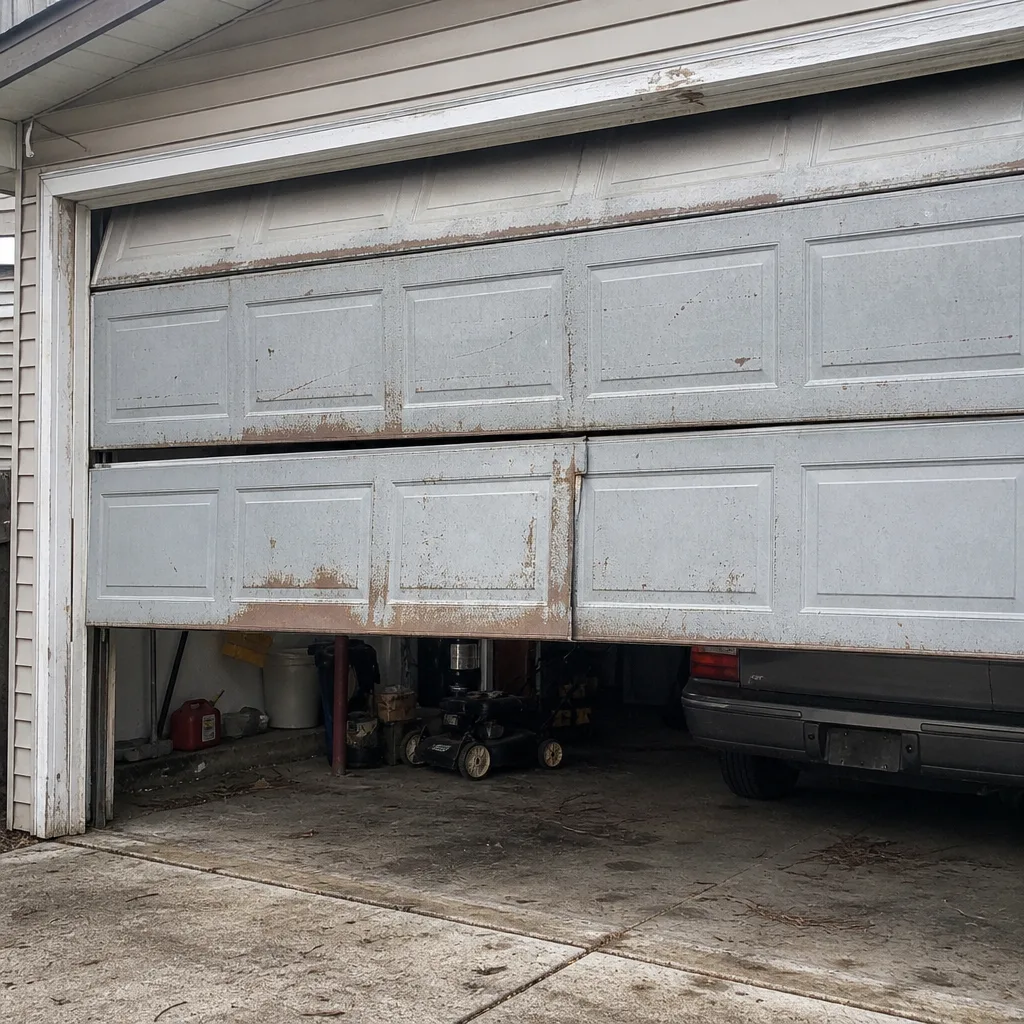 Before
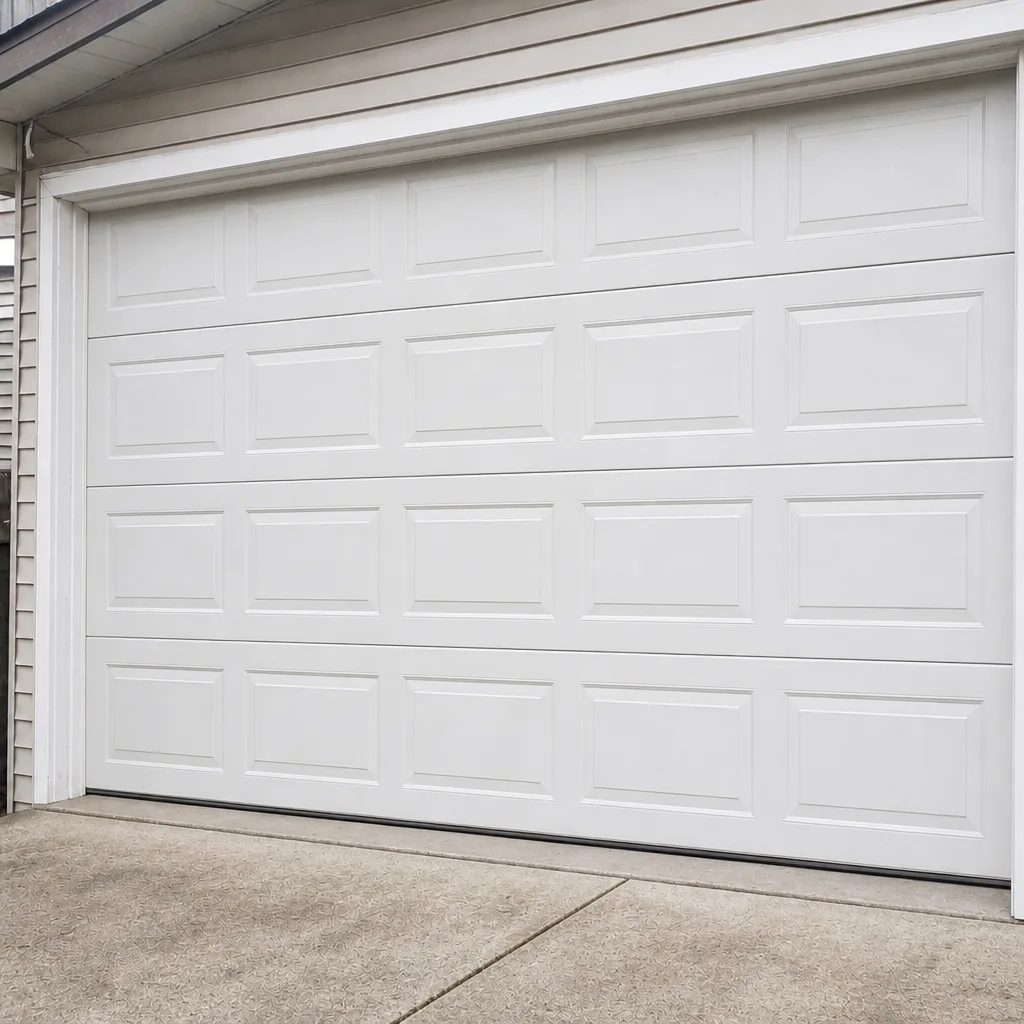 After
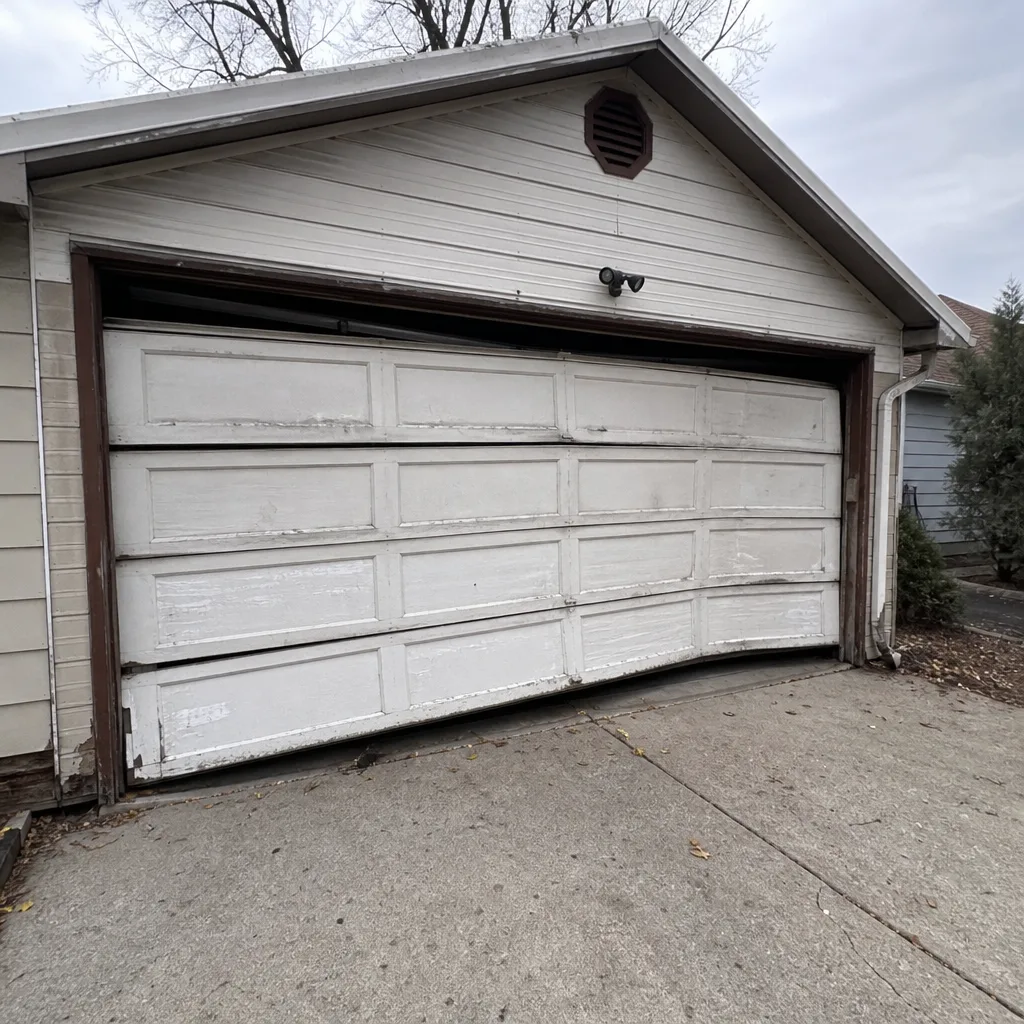 Before
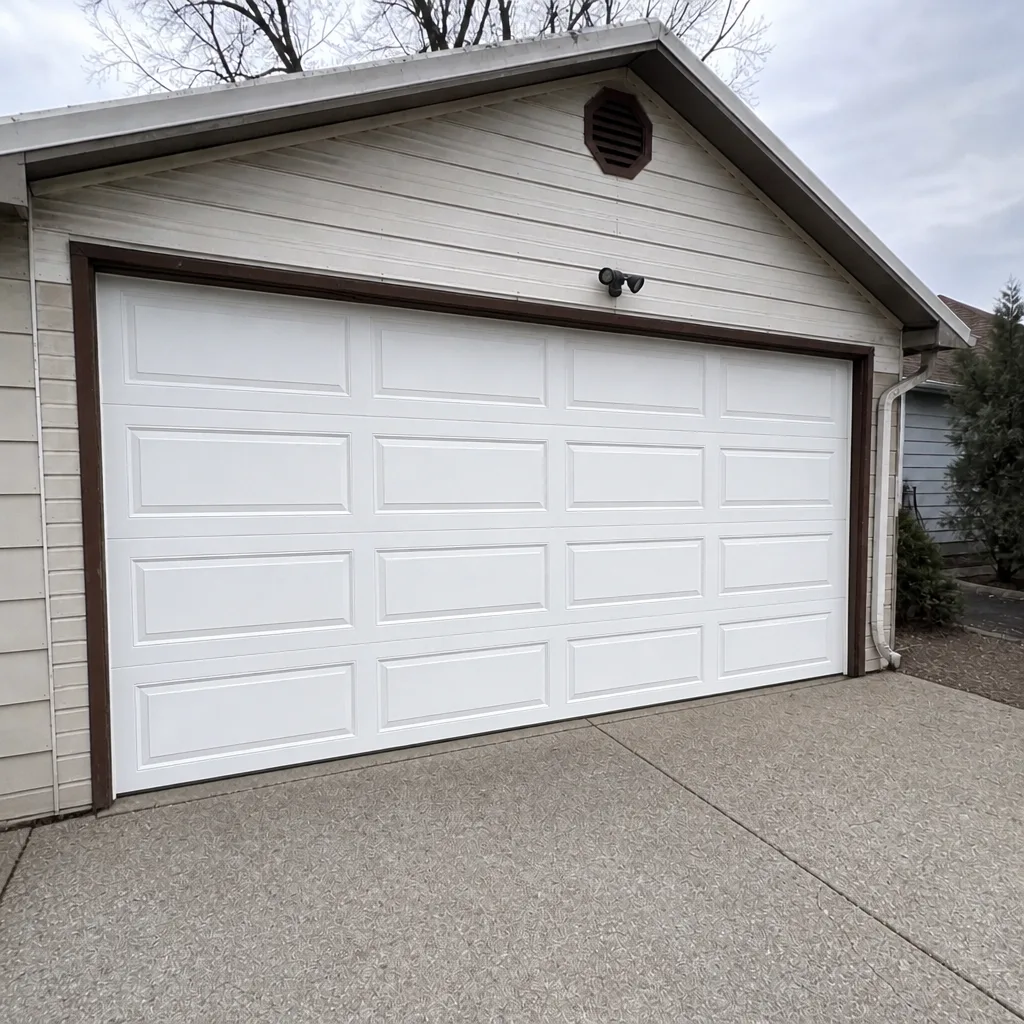 After
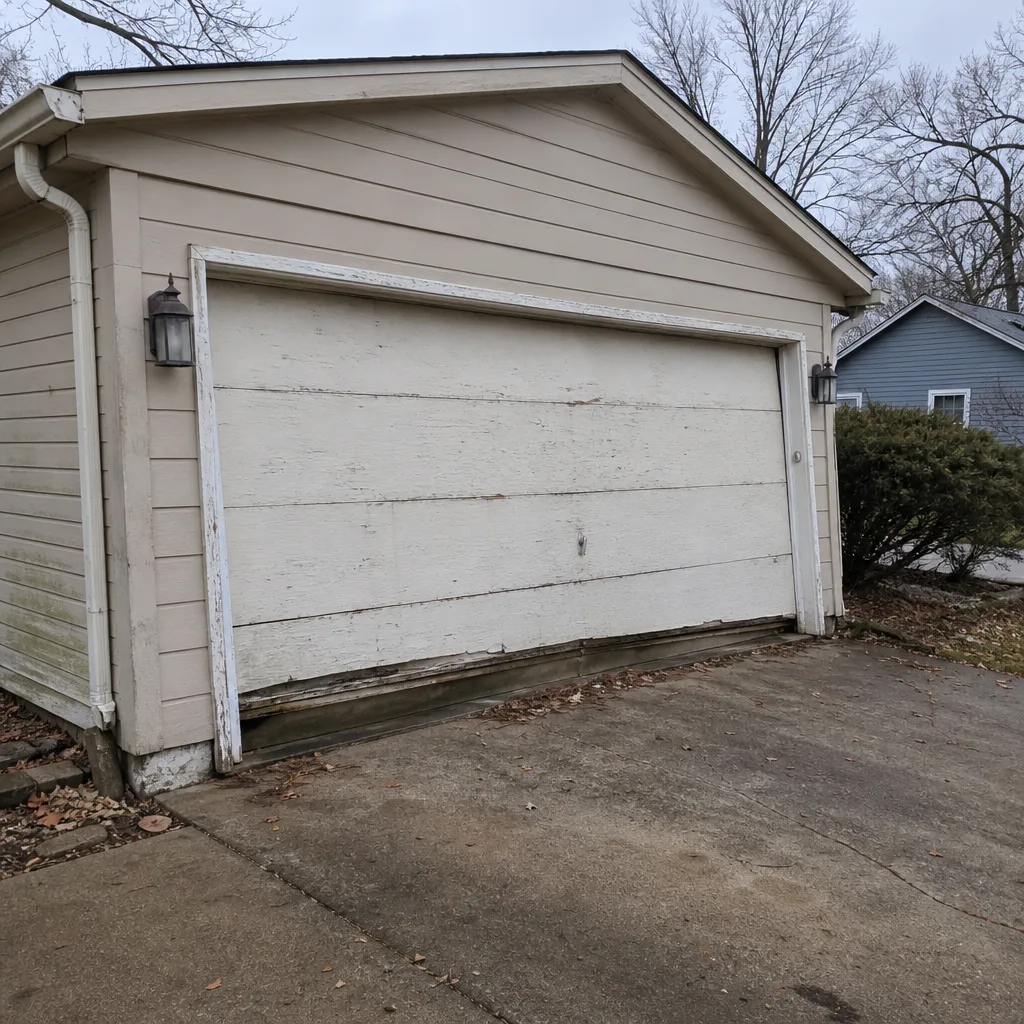 Before
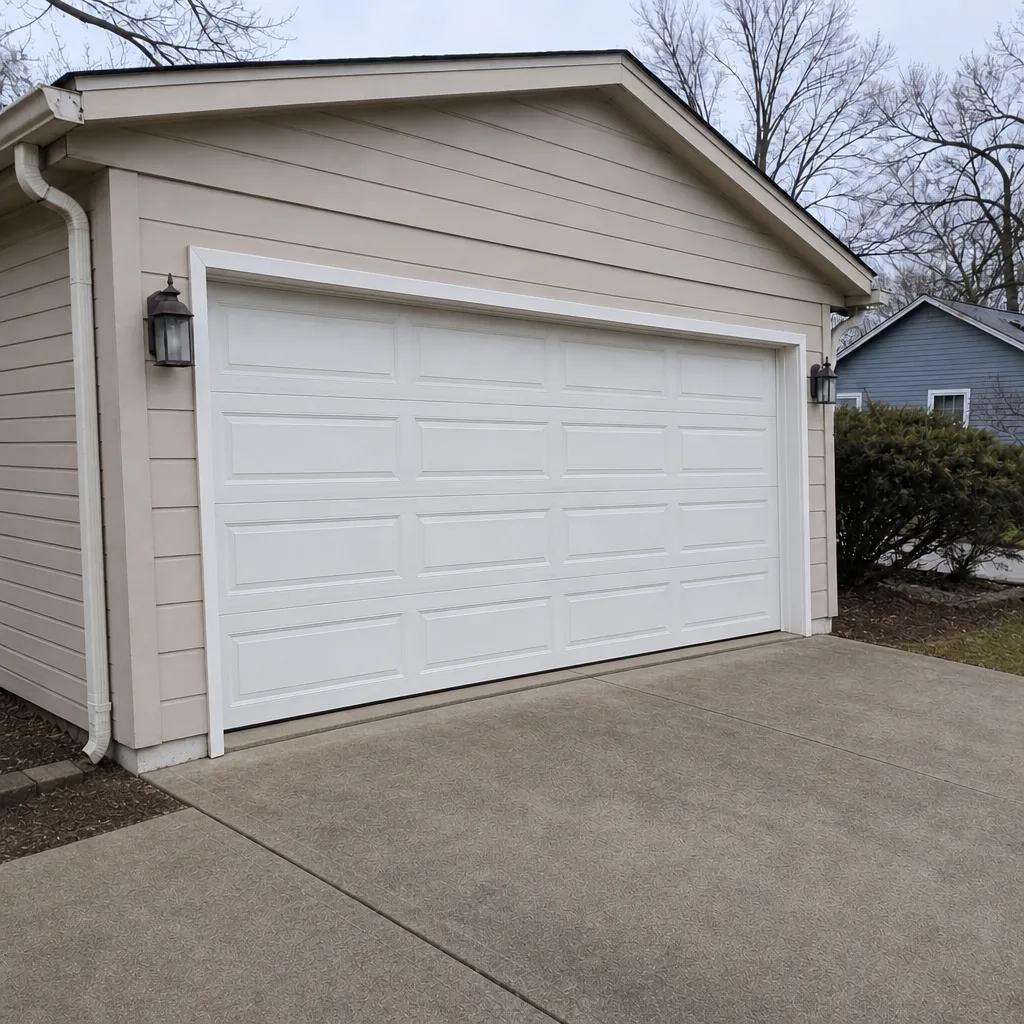 After
When to Call a Professional
Some jobs are seasonal tune-ups you can do yourself with a tube of lubricant and a wrench. Others aren’t, and pushing past that line is how an inconvenience turns into an injury or a much bigger repair. Call a professional when a spring is broken or distorted, when a cable is frayed, kinked or slack, when the door is binding or out of square against one track, when the opener reverses or stops mid-travel in cold weather after lubrication and adjustment, when the auto-reverse fails a safety test, or when any part of the door or its hardware looks damaged enough to affect how it moves.
We’re the garage door specialist for Eagan homeowners who want one call to fix the whole system, not a string of referrals. Whether it’s a LiftMaster opener that’s giving up in the cold, a Clopay door that needs new springs, or a Wayne Dalton or Amarr system that needs a full tune-up, we work on your brand. If your door is stuck or something has failed and you need it handled urgently, we answer 24/7 and offer fast dispatch from 7am to 7pm. Eagan Garage Door Repair Pros offers free estimates in Eagan – call (877) 492-2497.
Frequently Asked Questions
You winterize a garage door in Eagan by doing fall prep before the first hard freeze: lubricate all moving parts, test the auto-reverse and photo-eye sensors, inspect and replace the bottom seal if worn, check the springs for gaps or stretching, and tighten all hardware. The key is timing – the 30 days before the first hard freeze is your window, and missing it means going into winter with a door that’s already under stress. Call (877) 492-2497 for a free estimate if any of the checks turns up a problem.
The most common winter garage door problem in Minnesota is a broken torsion spring, followed closely by an opener that reverses or stops mid-travel because cold weather has made the door physically harder to move. Springs are more brittle in extreme cold and carry the door’s full weight, so a spring that was near the end of its life in fall usually fails in January. A door that reverses in cold is almost always a stiffness or alignment problem – don’t just raise the force setting, which defeats a safety feature. Call (877) 492-2497 if your door reverses or won’t move in the cold.
Yes – lubricating in both fall and spring is the right routine for an Eagan door. Fall lubrication keeps parts moving when cold thickens grease and metal contracts; spring lubrication cleans up the grit and salt that accumulated over winter and restores smooth operation before summer heat expands the metal again. Use a proper garage door lubricant on rollers, hinges, bearings and the opener chain or screw, not WD-40, which cleans rather than protects.
A garage door in Eagan should be serviced twice a year – once in fall before the first hard freeze and once in spring after ice and salt season. Two tune-ups a year cover the seasonal threats this climate creates: cold-weather stiffness and spring failure in winter, corrosion and track misalignment in spring, UV and heat in summer. If you skip a season, you’ll usually see the consequences within a few months. Call (877) 492-2497 for a free estimate on a full tune-up.
Garage door spring repair in Eagan typically costs $150-$400 for a single torsion spring, and a matched pair usually runs about twice that, because springs should be replaced together to keep the door balanced. Spring work is dangerous – a torsion spring is stored energy, and a broken spring or a failed cable can cause serious injury if handled incorrectly – so this isn’t a job to attempt yourself. The written estimate sets the final price. Call (877) 492-2497 for an exact quote – estimates are free.
Yes – same-day service is available for most repair calls in Eagan, and emergency response is available for situations that can’t wait. We answer 24/7, and dispatch runs from 7am to 7pm, Sunday through Friday, so a call outside dispatch hours is booked into the next opening. If your door is stuck, a spring has broken, or the opener has failed and you can’t get the car out, call (877) 492-2497 and we’ll take it from there.
The Bottom Line
Seasonal garage door care in Eagan isn’t a generic checklist – it’s a set of tasks tied to what each season actually does to your door. Fall prep before the first freeze is the highest-value work you can do all year. Winter is about watching for cold-weather stiffness and not overriding safety features. Spring is the damage audit after ice and salt season. Summer is about UV and heat, especially on south and west exposures. Do two tune-ups a year at the right times, know the danger signs (springs, cables, auto-reverse), and call a professional the moment something mechanical is off. Our technicians have up to 14 years of experience and we’re trained to service Clopay, Amarr, Wayne Dalton and Raynor door systems alongside LiftMaster, Chamberlain, Genie and Craftsman openers – so you’re not bounced to a referral. For Eagan Garage Door Repair Pros standard or emergency work, call (877) 492-2497. We answer 24/7. Fast dispatch from 7am to 7pm, Sunday through Friday.
Written by the team at Eagan Garage Door Repair Pros.